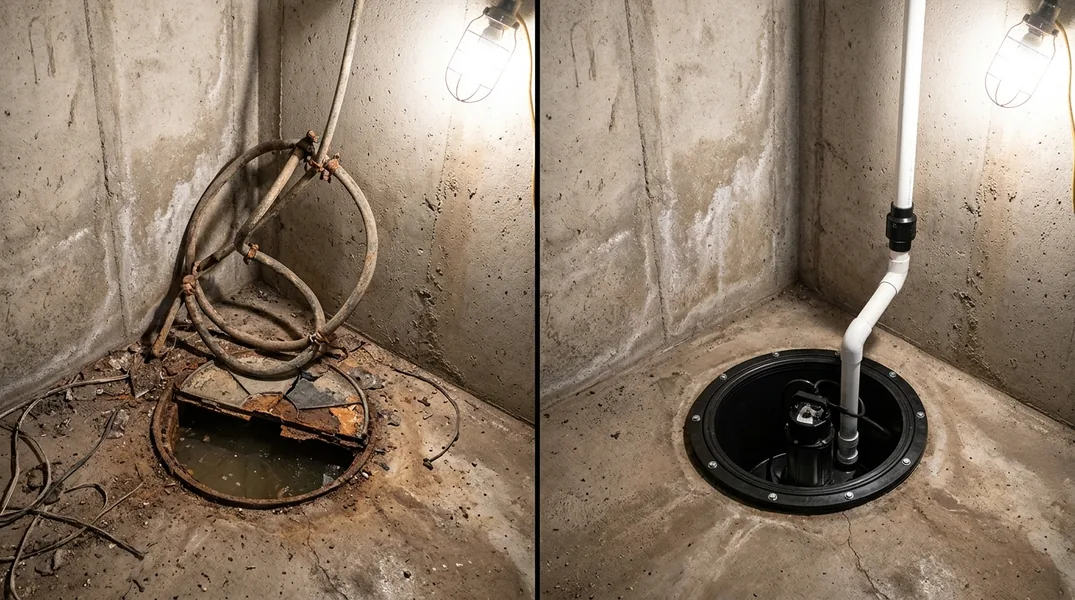
Why Spring Runoff Is Hard on Davenport Sump Pumps
Spring in the Quad Cities brings a predictable but powerful combination: melting snow, saturated soil, and heavy rain. When that water saturates the ground around your foundation, it seeks the path of least resistance, and that path is often your basement. Your sump pump is the last line of defense, and after a long winter of sitting idle, it may not be ready for the workout ahead. A pump that ran fine last April can fail in the first big thaw if the float is stuck, the discharge line is frozen, or the motor has quietly worn out.
Homeowners in Davenport and across the region know the drill: the Mississippi rises, the creeks swell, and the water table climbs. That is why a preseason sump pump check is not optional maintenance. It is the cheapest insurance you can buy against a flooded basement. Taking an hour now to inspect and test your system can save you thousands in water damage, ruined belongings, and emergency repairs later.
Sump Pump Maintenance Checklist Before the Thaw
Start by unplugging the pump and removing the lid from the sump pit. Look inside for debris, silt, or gravel that could clog the intake. Clean the pit if needed and make sure the float moves freely. A float that sticks in the up position will let water rise until it overflows; one stuck down will keep the pump running until it burns out. Reconnect the power and pour a bucket or two of water into the pit to confirm the pump kicks on and shuts off at the right levels.
Next, inspect the discharge pipe and the Basement Waterproofing system it connects to. Check for cracks, loose joints, or ice blocking the exterior outlet. The pipe should carry water well away from the foundation, ideally several feet downhill. If your discharge line runs to a spot that stays wet or drains back toward the house, you are recycling water and stressing the pump. Also test the check valve, a small but critical fitting that stops water from flowing back into the pit after each cycle. A failing check valve causes the pump to short-cycle, which shortens its life and can leave standing water in the pit.
The Sump Pump Check Valve: Small Part, Big Job
The sump pump check valve is easy to overlook because it sits quietly on the discharge line, but it does two important jobs. First, it prevents the column of water in the discharge pipe from draining back into the pit after the pump shuts off. Without it, the pump would restart repeatedly, cycling on and off until the motor overheats. Second, it keeps water from flowing backward into your basement during a storm when the municipal storm sewer or exterior drainage is already overwhelmed.
Check your valve for mineral buildup, cracks, or a stuck flapper. If it is more than a few years old or you cannot remember the last time it was replaced, swap it out. It is an inexpensive part that pays for itself the first time a spring storm hits. While you are at it, confirm the valve is installed in the correct orientation; an arrow on the body points in the direction of water flow. If you are unsure, a professional inspection from Davenport Waterproofing can confirm your setup is right before the season turns. Call (563) 275-6972 to schedule a free estimate.
Battery Backup Sump Pumps: Your Storm Season Safety Net
Spring storms in the Quad Cities have a habit of knocking out power at the worst possible moment. A primary sump pump is useless without electricity, and that is exactly when water is rising fastest. A battery backup sump pump runs on a charged battery and takes over automatically when the main pump loses power or fails. It is not a replacement for your primary pump; it is a second line of defense that buys you hours or days of protection during an outage.
Test your backup system now, not during the storm. Check the battery charge, inspect the terminals for corrosion, and run a manual test cycle to confirm the backup pump engages. Most batteries last three to five years, and a battery that sat all winter may not hold a charge. If your backup is older or you do not have one, this is the season to add it. Many homeowners pair a backup pump with an Interior Drain Tile System so that water is collected and routed to the pit efficiently, giving the pumps less work to do.
When to Call a Pro for Sump Pump Service Near Me
Some maintenance is DIY-friendly, but certain warning signs call for a professional. If your pump runs constantly, makes grinding or rattling noises, trips the circuit breaker, or leaves water in the pit after a cycle, the motor or switch may be failing. If your basement has already taken on water during past storms, the problem may be bigger than the pump itself, including poor grading, failed Foundation Waterproofing, or a drainage system that cannot keep up.
If you live in Bettendorf, Eldridge, or Blue Grass, the same spring runoff patterns apply, and a local inspection can catch problems before they become emergencies. A professional can test the pump under load, check the check valve and discharge line, evaluate your backup system, and recommend Exterior Basement Waterproofing if water is entering from outside. If you want to know what service might cost, ask for a written scope and estimate. Davenport Waterproofing serves the Davenport area and can walk you through your options before the first big rain. Reach out at (563) 275-6972 or request a free estimate today.
Looking for a professional basement waterproofing contractor in Davenport? Davenport Waterproofing responds fast for all your basement waterproofing needs.
Get a Free QuoteOur services: Basement Waterproofing · Interior Drain Tile System · Exterior Basement Waterproofing